Basketball Club Teams San Diego Building Champions On and Off the Court
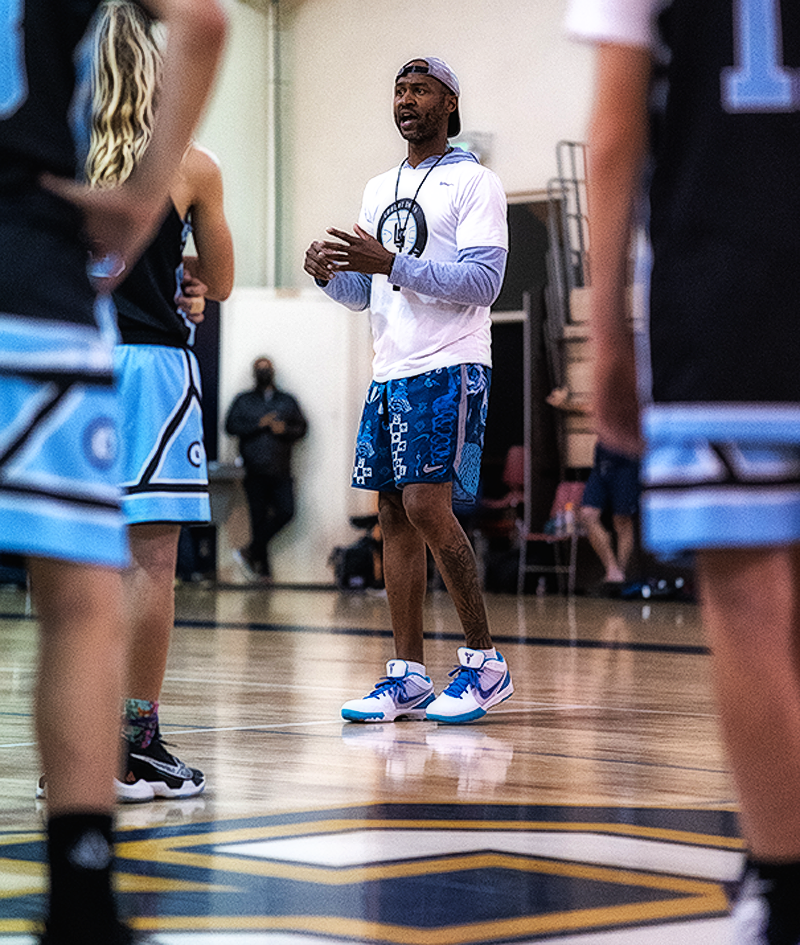
San Diego has always had the right ingredients for strong youth basketball: year-round weather, a deep pool of multi-sport athletes, ambitious families, and a competitive culture that stretches from neighborhood gyms to major travel circuits. But talent alone does not build complete players. It takes structure, coaching, repetition, accountability, and the right environment at the right stage. That is where basketball club teams San Diego families rely on can make a genuine difference.
Club basketball occupies an interesting space. It is not school ball, where a player may be tied to a campus and a short season. It is not casual rec league basketball either, where the goals are usually broader and the time commitment lighter. Club programs sit in the middle of player development and exposure. At their best, they sharpen skills, teach players how to compete under pressure, and expose them to a level of discipline that carries into school, work, and life. At their worst, they can become expensive treadmill experiences, full of games and light on teaching.
That distinction matters. I have seen players improve dramatically in one season because they were placed with coaches who demanded details, footwork, defensive habits, and decision-making. I have also seen families spend thousands of dollars on teams that traveled constantly yet never fixed a player’s weak hand, stance, or shot selection. The name of the club matters less than the daily standard inside the gym.
Why San Diego is such a strong club basketball market
San Diego offers something few basketball regions can match: range. Within a relatively compact area, you can find beginner-friendly development teams, elite travel programs, school-connected offseason training, and position-specific skill work. Players from North County, central San Diego, East County, and the South Bay all have access to different basketball communities, each with its own style and competitive rhythm.
The local basketball ecosystem also benefits from crossover athletes. Many young players in San Diego grow up playing soccer, baseball, volleyball, or football alongside basketball. That can be a real advantage. Multi-sport athletes often arrive with better coordination, lateral movement, and spatial awareness than peers who specialized too early. A good club coach sees that and builds on it, rather than trying to turn every player into the same template.
The year-round calendar helps too. Unlike colder regions where weather can interrupt training or travel, San Diego teams can maintain a steady development cycle. Players might train through the fall, compete in winter leagues, shift into spring travel tournaments, then spend summer in skill sessions and showcases. That consistency adds up. A player who gets quality reps over eleven months, even with built-in rest periods, will usually outpace a player who relies only on a short school season.
There is another factor people do not discuss enough: the level of expectation. San Diego families tend to be informed and engaged. Parents compare programs, ask about coaching backgrounds, and watch how practices are run. That scrutiny can be healthy when it is grounded in development rather than hype. Strong programs welcome questions. Weak ones often hide behind branding.
What club basketball should really be teaching
The phrase “development” gets thrown around loosely, but in serious basketball circles it has a specific meaning. Development is not just sweating through drills. It is progressive teaching that changes how a player performs in live action.
A good club team improves a player in several overlapping ways. First, there is skill development: ball handling under pressure, shooting mechanics that hold up at game speed, passing reads, finishing through contact, and footwork on both ends. Second, there is tactical development: spacing, help defense, transition decisions, timing, and understanding role responsibility. Third, there is competitive maturity: body language, communication, toughness, and poise after mistakes.
The best basketball club teams San Diego has to offer usually understand that these layers must be taught together. A player may look sharp in a cone drill and still struggle in real games if they cannot read defenders. Another may score well but hurt the team because they miss rotations or stop moving without the ball. Club basketball should connect individual skill to team basketball.
One of the clearest signs of a strong program is what happens after a mistake. In weaker environments, the correction is emotional and vague. A coach yells, the player nods, and nothing changes. In stronger environments, the correction is specific. “You drove baseline with no angle, next time reject the screen.” “You helped one pass away, stunt and recover instead.” “Your feet were too narrow on the catch, fix the base.” That kind of teaching sticks because the player knows what to do next possession.
The difference between busy and productive
https://rowanwopu424.quillnesty.com/posts/how-athletes-balance-school-and-basketball-club-teams-in-san-diegoNot every packed schedule produces growth. Some teams play four or five games in a weekend and call it development. Sometimes that volume has value, especially for older players learning to adjust quickly. But games alone do not fix habits. If a player spends six weekends a month repeating the same mistakes with little guided instruction, the schedule becomes busy rather than productive.
I often tell families to watch an entire practice before they commit. The truth shows up quickly. Are players standing in long lines? Is the coach teaching details or just rolling the ball out? Do drills transfer to live decision-making? Is there deliberate defensive work, or does everything revolve around scoring? Are younger players corrected patiently, or shamed for not already knowing what they are there to learn?
A ninety-minute practice can reveal more than a flashy tournament flyer. Productive gyms have tempo, but they also have purpose. There is teaching, correction, and repetition. You can hear the language of the game. You can see whether assistants are engaged or simply occupying space. You can tell whether players trust the coaching enough to be coached hard.
Age matters more than many families realize
Club basketball should look different for a ten-year-old than it does for a sixteen-year-old. That sounds obvious, yet many programs blur the stages. Younger players often need broad skill exposure, patience, and an environment that protects confidence while still challenging them. Older players need sharper role definition, stronger competition, and a realistic picture of where they stand.
For elementary and early middle school players, the emphasis should remain heavily on fundamentals. That means footwork, passing, dribbling with both hands, shooting form, finishing angles, and defensive stance. This is also the phase when players should experiment. A taller twelve-year-old should still handle the ball. A smaller player should still learn post footwork. Early specialization by position can stunt growth because bodies and roles change fast during adolescence.
By the time players enter eighth grade and high school, the equation shifts. Fundamentals still matter, but game application becomes more urgent. Can the player defend in space? Can they make a quick read out of a ball screen? Can they shoot consistently enough that defenders honor them? Can they handle physical play without losing composure? The answer to those questions shapes how useful a club team will be.
Older players also need honesty. Not every athlete is on a Division I path, and pretending otherwise does no one any favors. Serious programs can encourage ambition while still giving clear feedback. A player may need to hear, respectfully, that they project best at the Division III, NAIA, junior college, or strong high school varsity level unless certain areas improve. That is not negativity. It is guidance.
The off-court impact is real
The strongest clubs do more than produce points per game. They teach habits that stay with players when the ball is not in their hands.
Showing up on time sounds basic until you see how many teenagers struggle with it. Club basketball teaches punctuality because the gym does not wait. Preparation becomes visible too. Players learn to pack gear, manage schoolwork around tournament weekends, hydrate properly, and recover after tough stretches of games. They learn how to respond when they do not start, when shots do not fall, or when they lose minutes because a teammate has earned more trust.
These are not small lessons. They shape adulthood. Resilience is built in moments that do not make highlight reels. The player who sits for a half after careless turnovers and returns focused in the second half is learning something useful. The athlete who balances training with homework on a travel weekend is building discipline. The teammate who cheers while injured instead of withdrawing is learning maturity.
I remember watching one guard in a San Diego-area club program who barely played meaningful minutes early in the season. She could have quit, and many players would have. Instead, she became the best communicator on the bench, stayed after practice to work on her handle, and defended like her life depended on it whenever she got a chance. By late spring, she had carved out a closing lineup role, not because someone handed her confidence, but because she built it possession by possession. That arc tells you more about the value of club basketball than any social media clip.
How parents can judge a program without getting lost in marketing
Families entering the club scene often face the same problem: every program claims development, exposure, and family atmosphere. Those words are easy to print. Harder to fake are training quality, communication style, and roster management.
A strong program is usually transparent about who it serves. Some clubs are ideal for beginners who need a structured on-ramp. Others are built for high-level travel competition. Problems start when a program sells itself as both everything and everywhere. If a team claims elite exposure but cannot explain who attends its events, or if it promises individualized development without enough gym time, families should ask harder questions.
It helps to focus on the practical details:
- How many players are kept on each roster, and how are minutes generally earned?
- How often does the team practice, and who actually runs those sessions?
- What is the expected travel commitment, including out-of-county or out-of-state events?
- How does the coaching staff communicate with players and parents during the season?
- What does the club believe a successful season looks like beyond wins and losses?
Those questions cut through branding fast. They also protect families from one of the most common frustrations in club sports, unclear expectations. A roster with twelve or thirteen players may be fine if the staff explains roles honestly. A travel-heavy calendar may be worth it for the right athlete, but not if the family expected a mostly local schedule. Mismatch creates resentment. Clarity builds trust.
The money conversation, handled honestly
Club basketball is expensive. There is no reason to pretend otherwise. Fees can include tuition, uniforms, tournament entry, travel, skill sessions, and sometimes separate costs for gear or team events. In a market like San Diego, where living costs are already high, this becomes a serious family decision.
Cost by itself does not determine quality. Some expensive programs provide excellent coaching, smart scheduling, and meaningful competition. Others charge premium rates for average instruction. On the other side, lower-cost teams can offer strong value, especially when they focus on teaching and local play rather than nonstop travel.
Families should think in terms of return on investment, not just price. If a player is younger, still building fundamentals, and not yet ready for national travel, the best investment may be a local club with excellent practices plus separate skill work. If a player is older, truly competitive at a high level, and needs to be seen in tougher events, then a more expensive travel schedule may make sense.
There is also a hidden cost that often gets overlooked: time. Long weekends, driving across the county, missed social events, and the emotional energy of year-round competition all affect the household. A good season fits the family’s actual capacity. Burning everyone out by May helps no one.
What coaches wish more families understood
From the coaching side, one issue comes up repeatedly. Families often focus on points and minutes before they understand what a coach is evaluating. Coaches notice things that do not always show up in a box score. Sprinting back in transition. Talking on defense. Setting a real screen. Making the extra pass. Staying poised after getting beat. Those habits decide trust.
Players who embrace small responsibilities tend to earn larger ones. The reverse is also true. A talented scorer who misses rotations, argues calls, or shuts down after being corrected becomes hard to rely on, especially in close games. Club coaches, particularly experienced ones, are often building lineups around consistency rather than raw flashes.
This is why communication matters. The healthiest clubs create space for questions without turning every decision into a negotiation. Parents should expect professionalism, but they should also understand that improvement rarely follows a straight line. A player can have a rough month and still be on the right path. Sometimes reduced minutes are not punishment, they are feedback. The best athletes learn from that instead of fighting it.
Skill training versus team play
One common debate around basketball club teams San Diego parents encounter is whether to prioritize team competition or private training. The honest answer is that most serious players need some of both, but the mix depends on age, level, and specific needs.
A player with weak footwork, poor finishing, or inconsistent shooting mechanics may not benefit much from simply playing more games. They need targeted skill work. On the other hand, a player who trains constantly but struggles to make reads in traffic may need more live team reps. Basketball intelligence grows in context. You cannot fully learn pace, timing, help-side reads, or end-of-game composure in isolated workouts.
The best development plans are balanced. Team basketball gives players pressure, structure, and role accountability. Skill training allows them to sharpen tools that games expose. The real question is not which one matters more in theory. It is which one the player needs most right now.
Red flags that deserve attention
Not every issue means a family should leave immediately. Coaching can be demanding, and competitive environments are not always comfortable. Still, there are warning signs that deserve serious weight.
If a club consistently humiliates players, ignores safety, changes fees without transparency, or stacks rosters so heavily that several athletes barely play meaningful minutes all season, families should reassess. The same goes for programs that promise recruiting outcomes they do not control. Good coaches can advocate and guide, but no honest person guarantees scholarships or roster spots.
Another red flag is chaos. Last-minute schedule changes happen in youth sports, but constant disorganization usually reflects deeper problems. If communication is poor before the season, it rarely improves under pressure. Structure matters because families are entrusting the program with time, money, and a child’s confidence.
What successful players tend to do differently
Across age groups and talent levels, there are a few habits that separate players who truly benefit from club basketball from those who plateau.
- They accept correction without collapsing emotionally.
- They work on weak areas, not just favorite moves.
- They compete on defense even when offense is not going well.
- They pay attention to spacing, timing, and teammates, not only the ball.
- They understand that confidence is built through preparation, not slogans.
None of those habits are glamorous. All of them matter. The players who make the biggest jumps are rarely the ones chasing the most attention. More often, they are the ones who string together ordinary disciplined days, then suddenly look transformed six months later.
Building something that lasts
The phrase “building champions” can sound overused unless we define it carefully. A champion is not just the leading scorer on a top travel team. A champion can be the player who learns to lead vocally after years of playing quietly. It can be the undersized forward who becomes indispensable because she rebounds every miss and rotates on time. It can be the teenager who develops enough discipline through basketball to carry that same standard into the classroom and eventually into work.
That is the real promise of basketball club teams San Diego families seek out. The game offers a testing ground. It reveals habits quickly. It rewards preparation, punishes drift, and gives immediate feedback. In the right program, that process becomes a gift.
Wins matter. Competition matters. Exposure matters for the players who are ready for it. But lasting value comes from daily standards. A well-run club teaches athletes how to practice with intention, how to handle setbacks, how to contribute to a group, and how to keep improving after the easy gains are gone.
San Diego has no shortage of players with ability. The challenge, as always, is matching that ability with the right environment. When families choose carefully and coaches teach with substance, club basketball becomes far more than a season on the calendar. It becomes one of the clearest places a young athlete can learn how excellence is built, slowly, honestly, and one possession at a time.
Lamont Smith Basketball Academy
888 Clairemont Mesa Blvd Suite T-2, San Diego, CA 92123
(619) 639-8778
FAQ About Basketball Club Teams San Diego
How can a player join an LSBA club team?
Players are evaluated during practices so the coaching staff can recommend an appropriate team and development level. Families should contact the academy to confirm current openings and evaluation details.
Are club teams available for newer basketball players?
Yes. LSBA describes multiple levels, including a developmental option for newer players as well as more competitive teams for athletes with prior club experience.
What do LSBA club team practices emphasize?
Practices emphasize basketball fundamentals, team defense, structure, communication, and player development. The specific focus may vary according to the team and experience level.
Do all LSBA teams travel?
Travel expectations vary by level. Some teams focus on local competition, while advanced teams may participate in tournaments elsewhere in Southern California or beyond. Families should confirm the current schedule before enrolling.